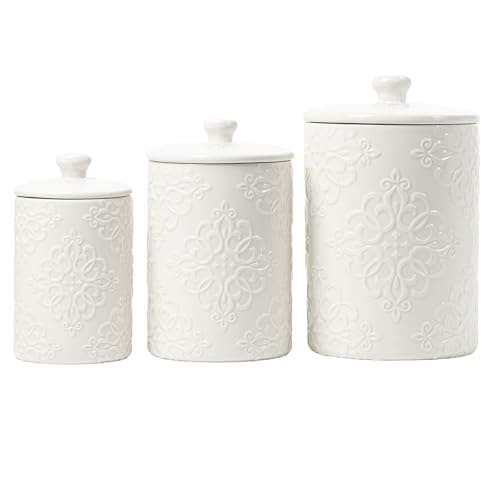
10 Strawberry Street Embossed Ceramic Canister Set (Set of 3)
Best for counter styling
A matching set of ceramic canisters that turns loose pantry clutter into a tidy counter vignette.
#ad · disclosure · Price as of August 4, 2026
Rooms
The shop-the-look and the counter-first order I use to make a kitchen feel warm instead of cluttered.
By Catherine Vizcaino · Home-renovation pro & founder
Updated August 2026

As an Amazon Associate, I Heart My Home earns from qualifying purchases. It never changes your price or our picks. Learn more.
The kitchen is the one room in the house that has to work as hard as it looks, and that tension is exactly why it’s so easy to get wrong. Most kitchens I walk into are not lacking cabinets or counter space — they are drowning in stuff left out because it never got a home. After years of renovating kitchens for a living, I can tell you the ones that feel finished are almost never the ones with the most decor. They are the ones where every visible thing earns its place.
So the order here is a little different from the rest of the house. You decorate a kitchen by editing the counters first, then layering the light, then adding warmth with a rug, textiles, and a few honest accents. Get the counters calm and the lighting right, and the styling almost does itself. Below is the exact shop-the-look I’d build a warm, working kitchen around, plus how to style it. For more of the practical pieces that finish a kitchen, our home goods picks are a good next stop.
One honesty note: Amazon prices move constantly, so every pick shows a Check price on Amazon button instead of a number I can’t promise. If you want a wider sweep of the category before you commit, browse our home decor ideas for inspiration by room and style.

Best for counter styling
A matching set of ceramic canisters that turns loose pantry clutter into a tidy counter vignette.
#ad · disclosure · Price as of August 4, 2026

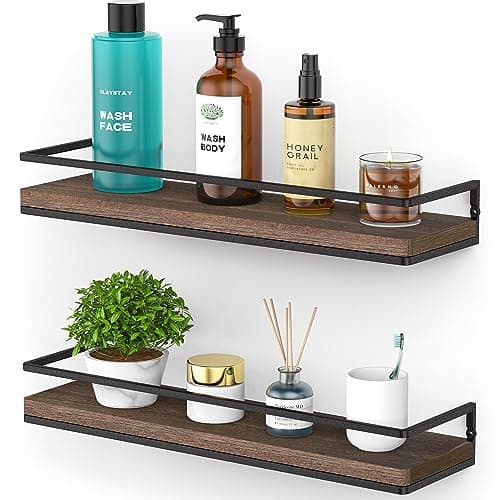
Best for open storage and display
Wall-mounted wood shelves that add warmth and display space without the bulk of a cabinet.
#ad · disclosure · Price as of August 4, 2026

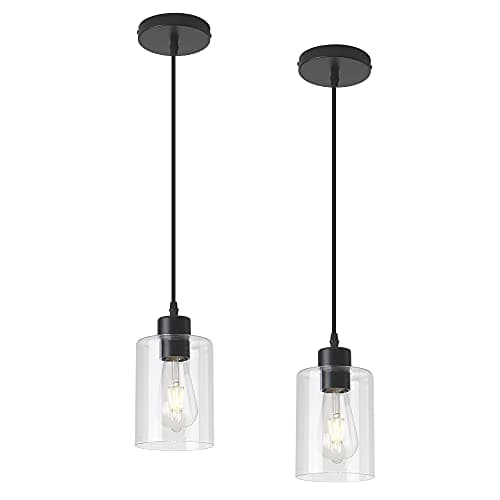
Best for island and sink lighting
A pair of clear-glass pendants that light an island and give a flat kitchen a real focal point.
#ad · disclosure · Price as of August 4, 2026

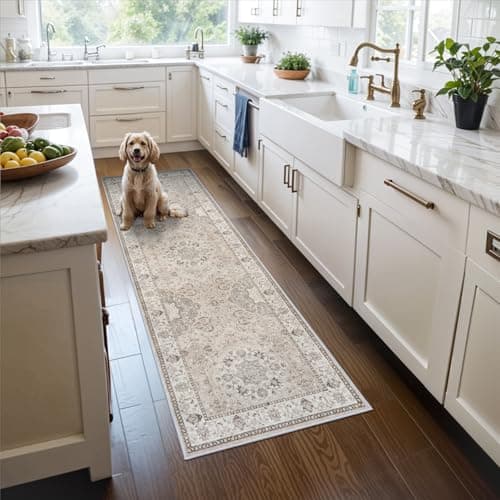
Best for underfoot comfort
A low-pile, machine-washable runner that cushions the sink zone and hides everyday spills.
#ad · disclosure · Price as of August 4, 2026

Best for a wall focal point
An oversized silent wall clock that fills an empty kitchen wall and doubles as decor.
#ad · disclosure · Price as of August 4, 2026

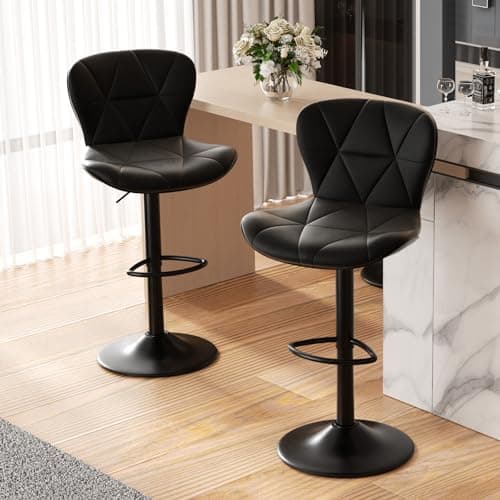
Best for island seating
Cushioned, swivel counter stools that turn an island into a spot people actually gather.
#ad · disclosure · Price as of August 4, 2026
Every kitchen I have ever made-over started the same way — by clearing the counters completely and only putting back what earns its spot. A kitchen reads as cluttered not because it lacks decor but because the counters are carrying appliances, mail, and packaging that never got a home. Decor cannot fix a crowded counter; it just adds to the pile. So the first move is subtraction, not shopping.
Once the surface is clear, put back only the daily-use items and give the rest a grouped home: coffee gear in one corner, a matching canister set for the staples you actually reach for, a tray to corral oils and salt by the stove. The tray is the trick — three things scattered look like mess, the same three things on a tray look intentional. For the storage pieces that get the overflow off the counter entirely, our home goods guide is where I would start.
Only after the counters are calm do you add the warm layer: a runner underfoot, open shelves with a few honest pieces, a plant on the sill. A kitchen that has been edited first can carry decor; one that has not just looks busier with every addition.
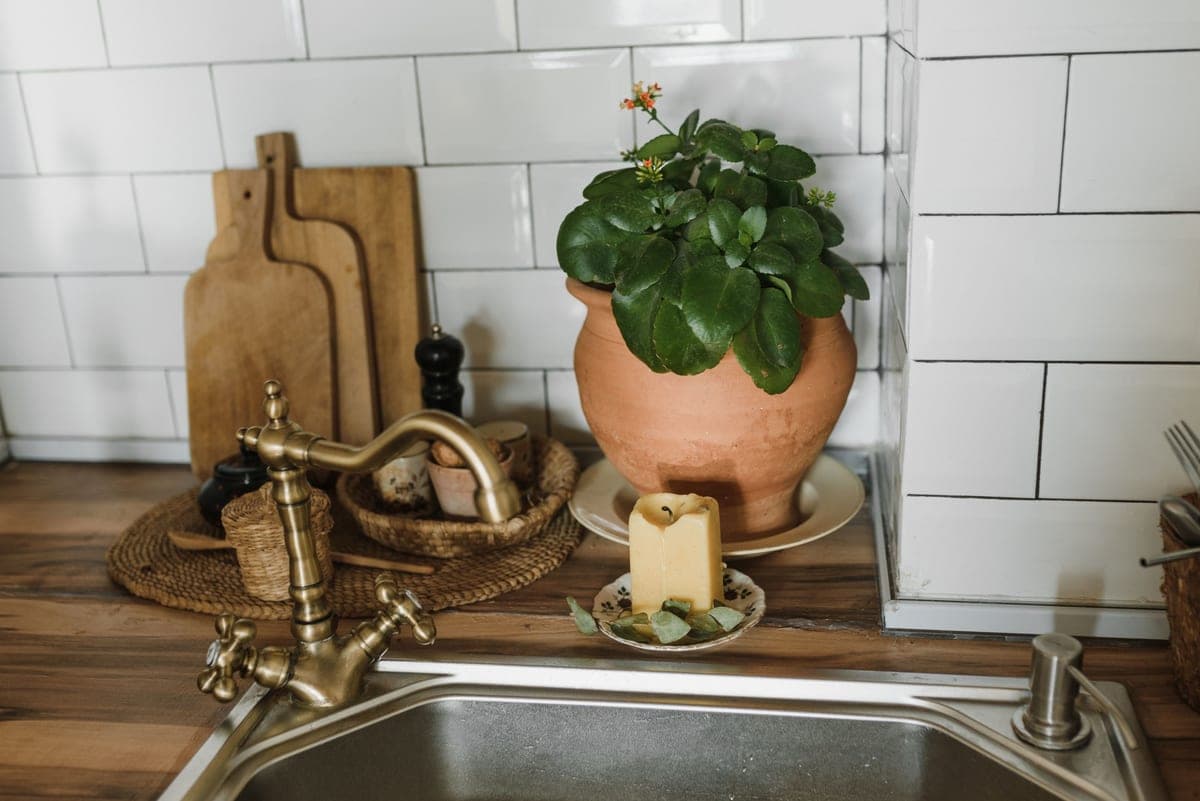
Kitchens are usually lit by one source — a row of recessed cans or a single ceiling fixture — and that flat, top-down light is exactly what makes a nice kitchen feel like a builder-grade box. The fix is the same as everywhere else in the house: add layers at different heights. A pendant over the island or sink brings the light down to where you work, and under-cabinet strips wash the counter and kill the shadow your body casts when you stand at it.
Color temperature matters as much as placement. In a kitchen I stay in warm-to-neutral white, roughly 2700K to 3000K, because anything cooler turns food gray and makes the room feel clinical. The ENERGY STAR guidance on reading a bulb’s color-temperature label is a two-minute read that saves you from buying a box of daylight bulbs that make your kitchen feel like a hospital.
Spend on the things your body actually touches and uses hard: the stools you sit on and the runner you stand on for hours. A comfortable, well-sized stool with a back gets used every day, and a washable runner that cushions the sink zone quietly saves your feet and your floor. Those are worth real money because they do real work.
Where I happily save: the purely decorative layer. A wall clock, a set of canisters, a couple of open shelves, and a plant do most of the visible warming for very little, because by then the counters are calm and the light is right. For affordable accents that finish the look, our home decor items guide stretches the budget the furthest — and if you want the kitchen to flow into the next room, the same warm, edited approach carries straight into our living room ideas.
Hang the bottom of the pendant about 30 to 36 inches above the countertop — that lights the work surface without blocking sightlines across the island. Over a longer island, space two or three pendants evenly with roughly 24 to 30 inches between them, keeping the outer ones set in from the ends rather than pushed to the edges.
A runner is usually the right call. Run a 2-by-6 or 2-by-8 foot runner along the main galley path in front of the sink and stove, where you stand the most. In an open kitchen you can use a larger low-pile rug under a table — just keep the pile low so it lies flat and make sure it is genuinely washable.
The good ones are, but read the label before you buy. Look for a low-pile rug that says machine washable and has a thin, flexible backing rather than a thick rubber one that cracks in the wash. Wash on cold and hang or lay it flat to dry so the backing lasts, and add a separate non-slip pad on smooth tile or wood so it does not slide when you pivot.
Clear everything off, then put back only what you use daily and give it a grouped home. Decant your staples into a matching canister set, corral oils and salt on a small tray by the stove, and move everything else into cabinets. Three things on a tray read as intentional where the same three things scattered read as mess — grouping is the whole trick.
Lean on warm neutrals and natural materials for the pieces you will not swap often — wood shelves, stoneware canisters, black or brass hardware and lighting. Save the trend colors for the cheap, changeable layer like a runner or a dish towel. That way the kitchen reads current without dating the pieces you paid the most for.
Browse the roundups I'd actually hand a client — honest picks, real trade-offs, and the one to buy first.