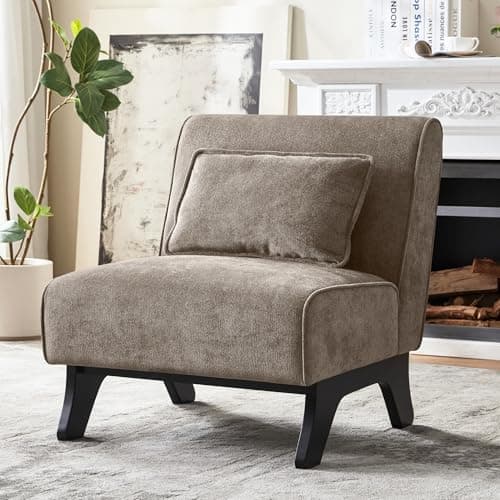
Womina Armless Upholstered Accent Chair
Best for Small-space seating
A clean-lined armless accent chair that reads far more expensive than it is, perfect for a reading corner or a tight bedroom.
#ad · disclosure · Price as of August 4, 2026
Compare
A home-only specialist versus the everything store, compared honestly for your next furniture buy.
By Catherine Vizcaino · Home-renovation pro & founder
Updated August 2026

As an Amazon Associate, I Heart My Home earns from qualifying purchases. It never changes your price or our picks. Learn more.
Wayfair and Amazon both let you furnish an entire home from your couch, but they go about it in opposite ways. Wayfair is a home-only specialist with millions of furniture and decor listings organized by style and room. Amazon is the everything marketplace, where home goods share the cart with everything else you buy and Prime delivery is the headline feature.
As someone who furnishes homes for a living, I order from both every month, and the right pick depends on how you shop. Below I compare selection, price, shipping, returns, assembly, and quality, then share which one I reach for on a real project. For specific picks you can order today, see our best furniture guide and the best home decor on Amazon.

Best for Small-space seating
A clean-lined armless accent chair that reads far more expensive than it is, perfect for a reading corner or a tight bedroom.
#ad · disclosure · Price as of August 4, 2026

Best for Living room anchor
A washable 5x7 rug that anchors a seating area without the cost or upkeep of a wool piece.
#ad · disclosure · Price as of August 4, 2026

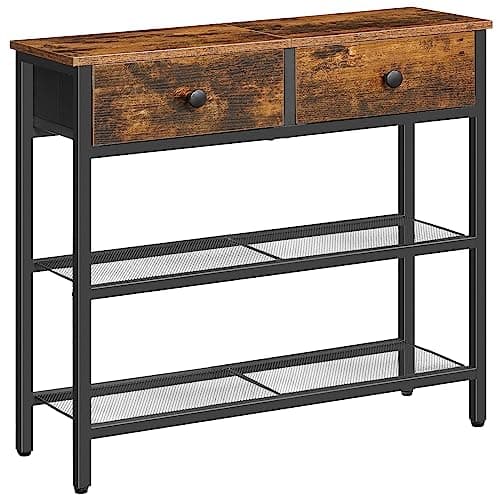
Best for Entryway storage
A slim console with fabric drawers and open shelves that tucks behind a sofa or against an entryway wall.
#ad · disclosure · Price as of August 4, 2026

Best for Instant gallery wall
A pre-framed set of three botanical prints that gives you a coordinated gallery wall out of one box.
#ad · disclosure · Price as of August 4, 2026
| Wayfair | Amazon | |
|---|---|---|
| Selection & range | Millions of home-only listings, sorted by style and room | Enormous marketplace; home is one of many categories |
| Typical price | Mid-range, with frequent sitewide sales and clearance | Wide spread from budget to premium; varies by seller |
| Shipping speed & cost | Free over a threshold; large items take longer to arrive | Prime often delivers in days; free on many items |
| Returns | 30-day window; large items can carry a return shipping fee | Generally easy 30-day returns; free on many items |
| Assembly | Most furniture ships flat-pack; some assembly required | Similar; assembly and instructions vary by seller |
| Quality consistency | Curated home catalog, but quality still varies by brand | Very broad; read the listing and seller carefully |
| Customer service | Home-focused support with design and room-planning help | Standardized, fast, returns-focused support |
| Best for | Browsing a huge home-only catalog by style and room | Fast delivery, price comparison, and one-cart convenience |
Bottom line: pick Wayfair when you want to browse a deep, home-only catalog by style or room and you have time for larger pieces to ship. Pick Amazon when speed, price comparison, and one-cart convenience matter most, or you are adding furniture to an order you are already placing. Neither is simply better — Wayfair is the specialist, Amazon is the fast generalist.
Wayfair is built for one job: furnishing a home. Everything on the site is furniture, decor, lighting, rugs, or housewares, and the whole catalog is organized the way a decorator thinks — by room, by style, by material. That focus is its strength. When you want to see forty console tables in a farmhouse finish under a certain width, Wayfair filters straight to them.
Amazon approaches it from the other direction. Home goods are one department inside the largest marketplace on the internet, sold by thousands of third-party sellers alongside first-party stock. You lose some of the curated, room-by-room browsing, but you gain unbeatable delivery speed, easy price comparison, and the ability to add a nightstand to the same cart as your groceries. For the pieces I buy most often, I keep a running short list in our best furniture guide.
On price, the two overlap more than people expect. Wayfair sits mostly in the mid-range and leans hard on frequent sitewide sales and clearance events, so timing your purchase to a sale genuinely matters. Amazon spans a wider spread — you will find both rock-bottom budget furniture and premium pieces — and because so many sellers compete on the same item, price comparison is easy.
One thing I always check on both sites is the actual materials list. A piece that photographs like solid wood is often engineered wood or veneer at these price points, which is fine as long as you know it going in. If your priority is spending as little as possible without buying junk, pair this with the best home decor on Amazon picks.
On job sites, I split them by task. When I am planning a full room and want to compare dozens of options in one finish — say, every 30-inch console table in a warm walnut — Wayfair’s home-only filters save me real time. Its room and style browsing is closer to how I actually design, so it is my starting point for the big anchor pieces.
When I need something fast, or I am buying accent pieces to finish a staging — a rug, a lamp, some wall art — Amazon almost always wins on delivery. If a client’s photos are Thursday and the room needs one more piece, Prime is the difference between done and not done. I also lean on Amazon when I want to read across many sellers of the same style and pick the one with the materials I trust.
My honest advice: do not marry one retailer. I routinely build a room from a Wayfair sofa and console, then layer in Amazon accents that arrive in two days. For where these two fit against the brick-and-mortar stores, see how they stack up in our HomeGoods vs HomeSense breakdown. And whatever you order, inspect anything with drawers, legs, or hinges the moment it arrives, while a return is still easy.

It depends on the item and the timing. Wayfair sits in the mid-range and runs frequent sitewide sales, while Amazon spans budget to premium with many sellers competing on the same listing. For any specific piece, compare it on both sites — and time a Wayfair buy to a sale event, which is when it tends to win.
Quality varies by brand, because Wayfair is a marketplace of many manufacturers rather than a single maker. The catalog is curated, but you still have to read the materials and dimensions before you buy. Most budget and mid-range pieces are engineered wood or veneer, which is normal at the price — just know it going in.
Amazon is usually faster, especially with Prime on small and mid-size items that can arrive in days. Wayfair offers free shipping over a threshold, but larger furniture typically takes longer to arrive, so plan ahead if you are on a deadline.
No. Wayfair is an independent, home-only e-commerce company, while Amazon is a separate general marketplace. They compete directly in furniture and decor, but they are not related and do not share inventory.
Wayfair is better for browsing a deep, home-only catalog by style and room, especially for the big anchor pieces. Amazon is better for fast delivery, price comparison, and mixing in accents. I use both — see the pieces I actually recommend in our best furniture guide.
Browse the roundups I'd actually hand a client — honest picks, real trade-offs, and the one to buy first.